Cerebro : AI‑Driven Crypto Portfolio Platform
Multi‑agent portfolio intelligence with clustering‑based allocation, risk controls (VaR, drawdown), and conversational analytics—designed for retail and pro users.
About the project
Cerebro helps users construct, analyze, and monitor crypto portfolios using machine learning and an LLM‑powered assistant (“Alice”).
The system clusters thousands of tokens into 8 categories and tailors allocations to user risk profiles from Ultra Conservative to Ultra Aggressive.
Cerebro
Crypto Analytics & Portfolio Management
Dedicated Team: AI/ML, Backend, Frontend, Data, DevOps
LangGraph, Python, Node.js, Next.js, MongoDB, PostgreSQL, Redis, Pinecone, Modal, Verce
Challenges
Signal quality
Many data sources but low signal‑to‑noise; needed robust features and evaluation.
Explainability
Users must trust recommendations with clear rationales and risk context.
Latency & scale
Fast responses over large historical datasets and minute‑level price feeds.
Security & privacy
Protect wallet addresses, balances, and preferences end‑to‑end.
Our solution
KVY TECH built a modular, explainable portfolio engine and LLM agent that couples ML signals with clear risk policies. The architecture supports rapid experimentation and production reliability.

Clustering‑based allocation
8 asset clusters (Steady, Momentum, Liquidity Leaders, etc.) guide diversified portfolios per risk tier.
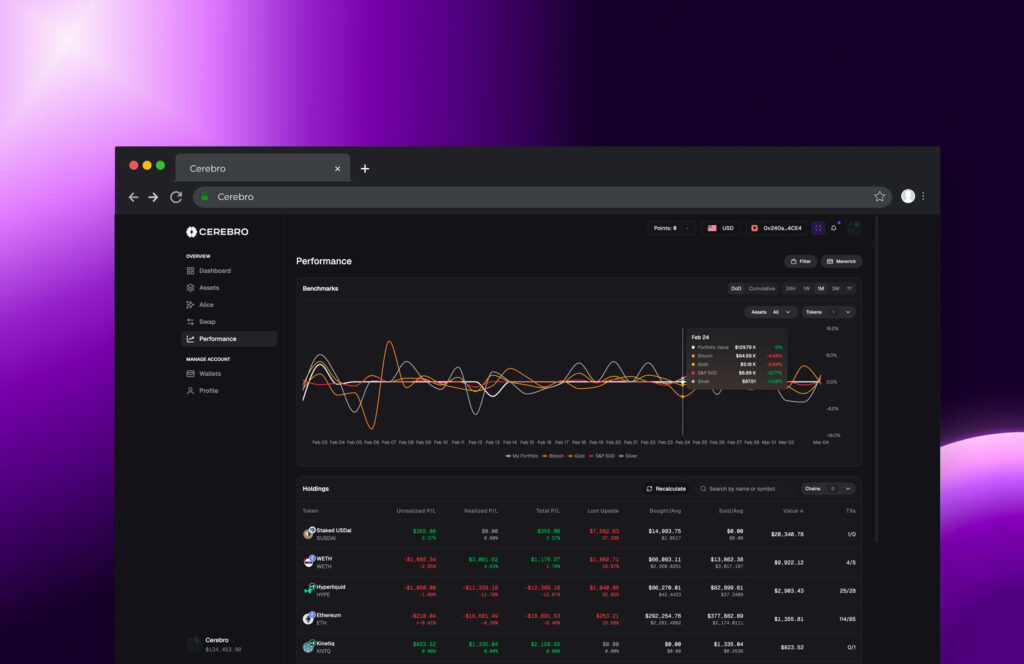
Backtesting & metrics
Evaluate returns, volatility, Sharpe/Sortino, and max drawdown vs BTC benchmark.
Real‑time alerts
ML‑triggered notifications for threshold breaches, drift, or market regimes.
Conversational analytics
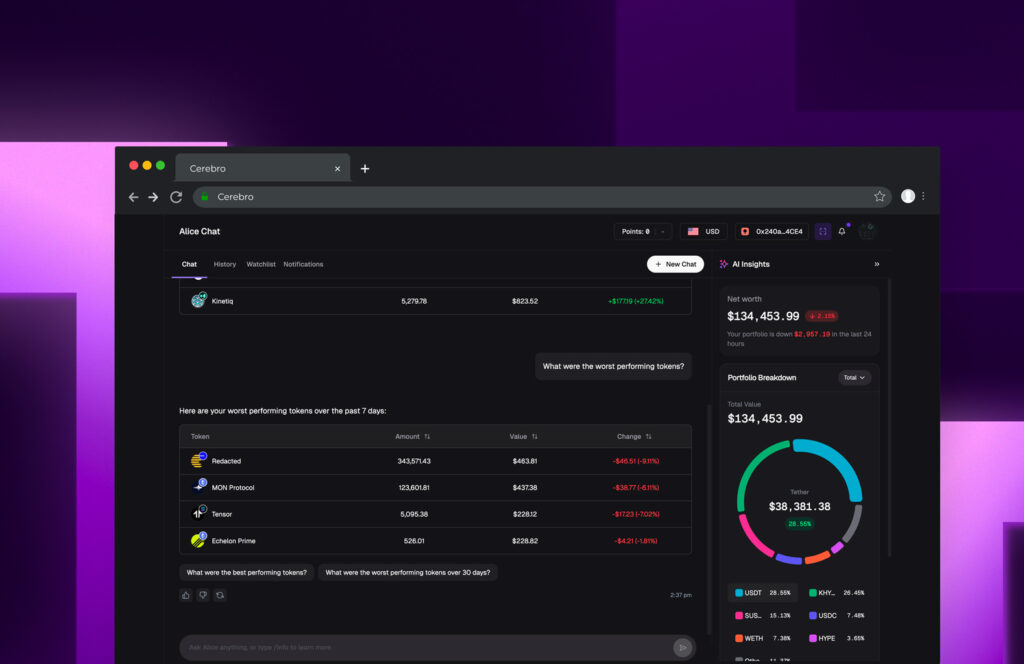
Alice explains rebalancing impact, token substitutions, and defensive tilts (MS1–MS9).
Data platform
Minute‑level price ingestion (CMC & others), feature store, vectors for semantic retrieval.
Security layer
Prompt sanitation, masking, app‑layer encryption, RBAC, and privacy‑first logging.
Technologies used
High-level architecture
Agent
LangGraph (ReAct loop) with tools for data retrieval, optimization, and alert rules.
Data
MongoDB for prices & analytics; PostgreSQL for relational entities; Pinecone for vector search.
Compute
Python + Modal for jobs; Node.js/Next.js API for app; Redis for queues & caching.
Backtesting
bt library with benchmark comparisons and reporting.
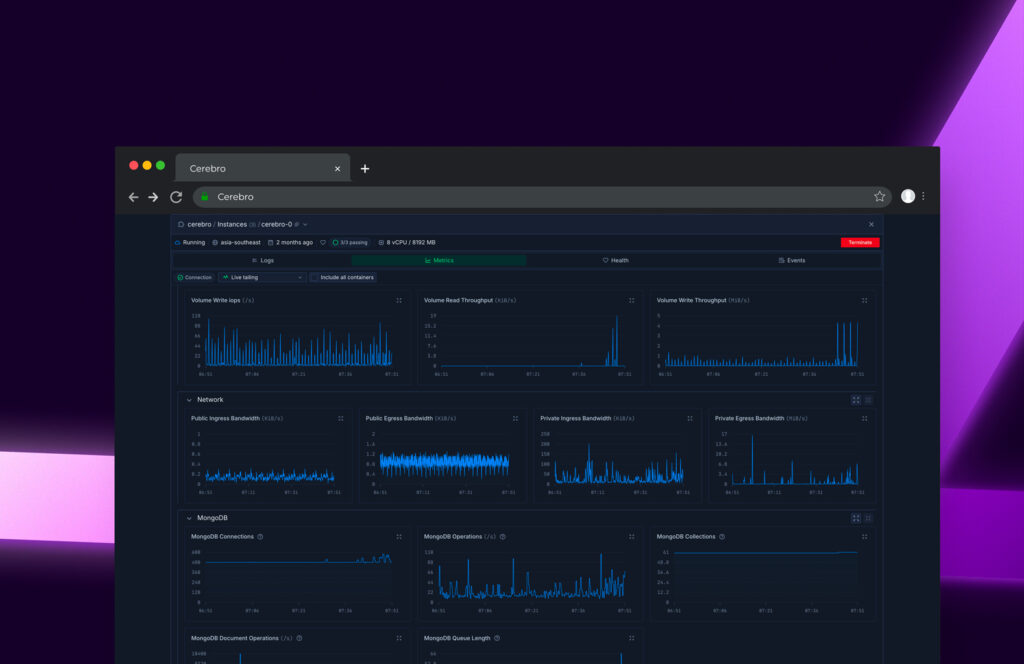
Observability
LangSmith traces for conversations; centralized logs/metrics/errors.
Deployment
LangGraph Cloud for agents; Vercel for web; containerized workers for schedulers.
Key capabilities
Risk‑aware portfolios
Uses VaR, drawdown limits, and cluster caps aligned to user risk profile.
Editable suggestions
Users can swap tokens/categories; engine re‑evaluates risk & returns instantly.
Scenario Q&A
Ask: impact of trimming to 5 tokens, defensive shift, BTC correlation, crash scenarios.
Virtual portfolios
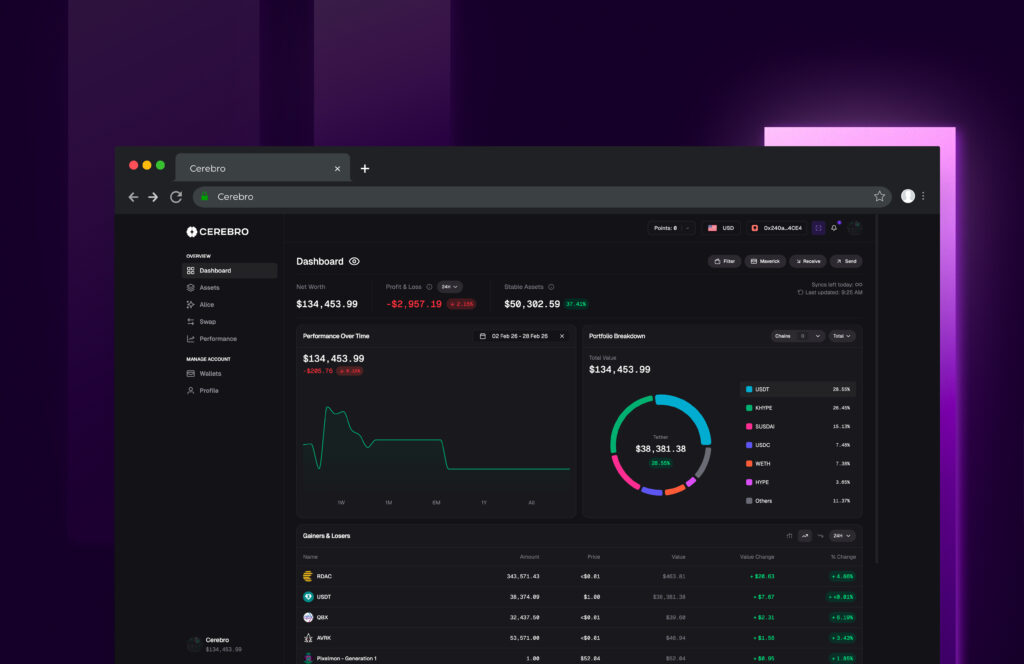
Create, save, and compare multiple what‑if allocations with donut charts & KPIs.
Security & privacy
Application‑layer encryption (AES‑GCM/Fernet/Tink) for sensitive fields (wallets, balances).
Prompt sanitization & masking for LLM I/O (LLM Guard) and prompt‑injection defenses (Rebuff).
Privacy‑first logging with hashing & redaction; scoped JWTs and row‑level security where applicable.
Runtime moderation and evaluation tests (Giskard) to prevent data leakage and regressions.
Note: Quantitative KPIs (Sharpe uplift, alert latency) can be added post‑production analytics.
Results and impact
Explainable suggestions
Alice cites drivers, constraints, and trade‑offs for each portfolio change.
Faster iteration
Modular agents & data layer enabled rapid feature experiments and A/Bs.
Production reliability
Cloud‑hosted agents with observability reduced incident MTTR and flakes.
User confidence
Risk rules & KPIs improved trust vs opaque black‑box signals.
Need an explainable
AI portfolio engine?
We build reliable, auditable ML + LLM systems that users trust.