


User experience (UX) continues to be a critical factor shaping decisions in our increasingly digital world. Whether selecting a website to shop from, an app to download, or a product to purchase, UX remains central to user satisfaction and business success.
A well-designed user interface can boost website conversion rates by up to 250%, and enhanced UX design can yield conversion rates exceeding 450%.
Industry Research, 2026
Let’s explore the fundamentals of user experience in product development as they stand in 2026, why UX is more important than ever, and how you can leverage it to elevate your products and profits.
1. Introduction to User Experience in 2026
Why do some digital platforms feel seamless and intuitive, while others frustrate users? The answer lies in user experience — the holistic perception and interaction users have with digital systems, including how they interact with websites, web applications, and software.
In 2026, user experience encompasses not only usability, accessibility, and system performance but also integrates emerging technologies such as AI-driven personalization, voice and gesture interactions, and adaptive interfaces that respond to user context and preferences. The ux design process is iterative rather than linear, with teams using feedback and user feedback throughout to refine solutions.
The roots of UX remain in human-computer interaction, but today’s UX designers also incorporate data analytics, machine learning insights, and real-time user behavior analysis to create smarter, more empathetic digital products that go beyond surface visuals.
Understanding and optimizing UX has never been more essential in product development, as user expectations continue to rise in today’s digital landscape.
2. User Experience (UX) vs User Interface (UI) in Modern Development
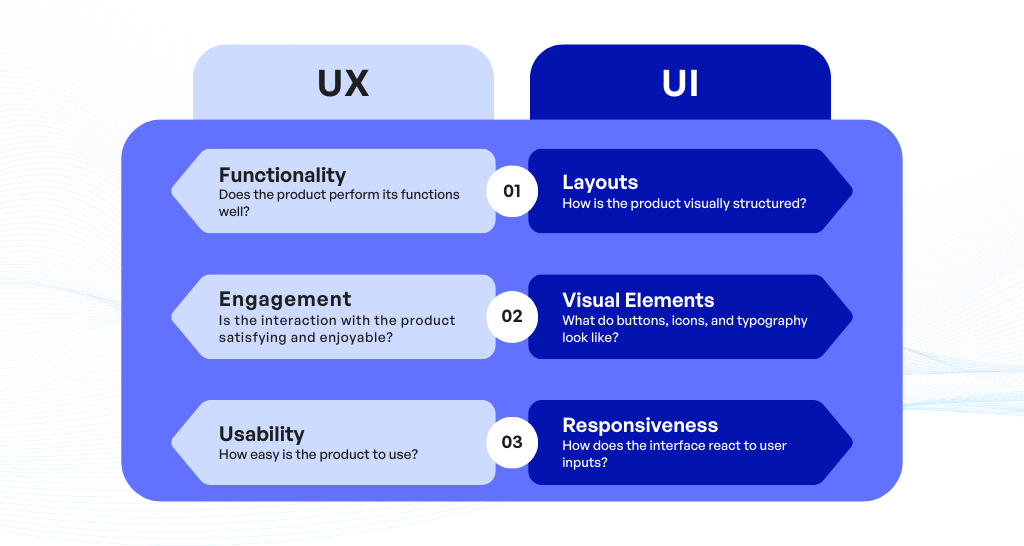
While UX and UI are often intertwined, they represent distinct yet complementary disciplines in product development, with both UX and UI shaping how a product works and how it looks.
User Experience (UX) focuses on the entire user journey — how users engage with a product, how intuitive it is, how it meets their needs, and how it makes them feel. It covers usability, accessibility, functionality, emotional engagement, and information architecture to help users complete key tasks with minimal friction.
UX designers today rely heavily on customer journey mapping, analyzing user behavior, and usability testing to identify pain points and optimize the overall experience.
User Interface (UI) focuses on the visual and interactive elements that users directly engage with — screens, buttons, icons, typography, layout, and responsive layouts that adapt to various screen sizes and devices.
UI designers emphasize interface design, visual aspects, and making navigation intuitive and consistent across platforms.
Good aesthetics should support usability, not replace it.
Together, UX and UI designers collaborate closely within the development team to create user-centered products that align with business goals and deliver competitive advantage.
3. Why User Experience Matters More Than Ever in 2026
User experience remains at the center stage of product success. With evolving user expectations and technological advances, UX now directly influences business outcomes and competitive positioning.
Key reasons UX is vital in product development today include:
- Meeting User Expectations: Users expect seamless, personalized, and accessible experiences across devices and contexts.
- Reducing Usability Issues: Usability testing and analyzing user behavior help identify pain points early, minimizing costly redesigns.
- Enhancing Retention and Loyalty: Products that deliver smooth, engaging experiences foster long-term customer relationships and improve customer satisfaction.
- Driving Higher Conversion Rates: Intuitive user flows and optimized interface design increase user satisfaction and sales.
- Supporting Business Goals: UX work aligns product design with company objectives, ensuring solutions deliver measurable business value.
Incorporating UX design principles from the start of development begins with user research and continues through iterative design, prototyping, and usability testing with real users, where teams work closely across each stage. These rapid cycles help maintain focus on user needs and business priorities.
4. Ways to Enhance User Experience in 2026
Enhancing UX requires a comprehensive design process that integrates user insights and modern design tools to answer questions raised by research and testing.
Some effective techniques include:
- User Research and Customer Journey Mapping: Deeply understand your target audience and their interactions with your product, and use user stories to translate research into actionable design and development priorities.
- Analyzing User Behavior: Use analytics and usability testing to identify pain points and optimize user flows.
- Usability Testing: Continuously validate design decisions with real users to ensure the interface is intuitive and accessible.
- Accessibility: Prioritize inclusive design to meet diverse user needs, including those with disabilities.
- Visual and Interface Design: Combine UI design principles with UX insights and web design best practices to create appealing, responsive, and easy-to-navigate interfaces.
- Iterative Prototyping: Rapidly develop and test prototypes to refine ideas, gather feedback, and improve the design before implementation is complete.
5. The Impact of User Experience on Business Profits in 2026
The connection between UX and profitability is stronger than ever for teams and decision makers alike. Positive user experiences lead to:
- Repeat Business: Users are more likely to return and build stronger relationships with your product over time.
- Brand Advocacy: Happy customers become promoters, driving organic growth.
- Cost Reduction: Fewer usability issues mean less support overhead and fewer returns.
- Competitive Advantage: Superior UX differentiates your product in crowded digital marketplaces.
Feedback from customers and stakeholders also helps connect UX investment to measurable profit outcomes.
Investing in user experience design is no longer optional but a strategic imperative to achieve sustainable business outcomes.
6. Final Thoughts
As we look ahead in 2026, UX remains a cornerstone of successful product development. Integrating UX design processes, from user research to usability testing, ensures that products meet user needs and business goals in today’s dynamic digital landscape.
Remember, UX is both an art and a science — combining design principles, user insights, and technology to create user-centered products that resonate with your target customers.
By prioritizing UX, your company can achieve higher conversion rates, stronger customer loyalty, and a meaningful competitive advantage.
The future belongs to those who place real users at the heart of design and development.
For any questions or assistance with UX design and product development, feel free to contact KVY TECH.